


A Guide to Ponce Architecture Worth Slowing Down For

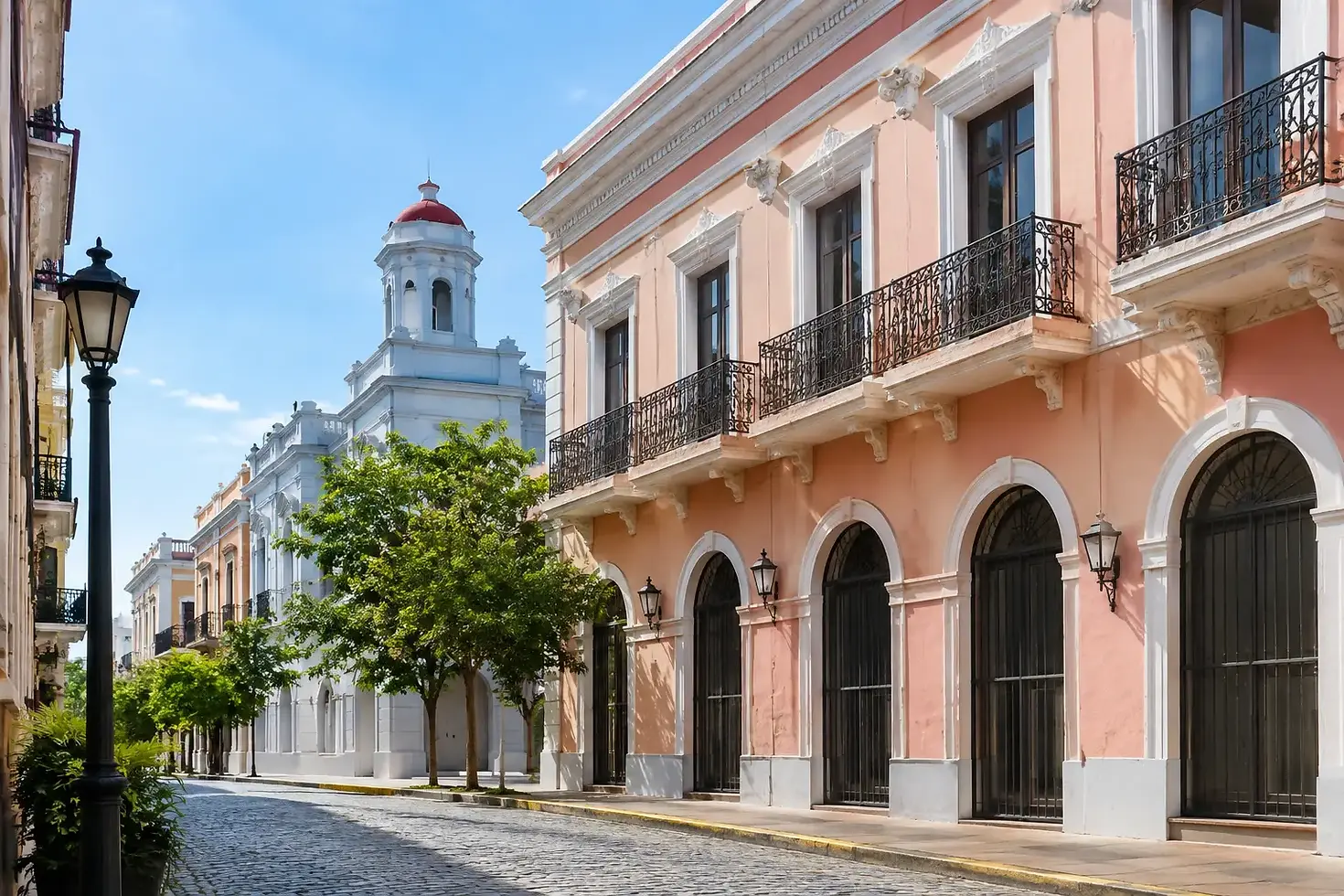
Ponce rewards travelers who look up, slow down, and take one more block before calling it a day. This guide to Ponce architecture is your invitation to read the city through its balconies, stained glass, ornate facades, and bright Caribbean color. The historic center is compact enough to explore on foot, but layered enough to make a quick walk feel like a trip through several centuries.
Unlike a city built around one single architectural style, Ponce is a living mix. Spanish colonial traditions sit beside neoclassical civic buildings, Creole homes, Art Nouveau flourishes, and Art Deco geometry. That variety is exactly what makes the city memorable. You are not just checking off landmarks. You are seeing how a prosperous southern Puerto Rican city shaped its own visual identity.
Start at Plaza Las Delicias
Plaza Las Delicias is the natural first stop because it places several of Ponce's most recognizable buildings within a few minutes of one another. Take a moment here before rushing to photograph the famous red-and-black firehouse. The plaza itself reveals how public life and architecture work together in Ponce: shade, fountains, benches, formal facades, and a steady flow of people moving through the center.
The Catedral Nuestra Señora de la Guadalupe anchors the plaza with a dignified presence. Its current appearance reflects rebuilding and alterations over time, which is common in Puerto Rican historic structures shaped by storms, fires, changing tastes, and practical needs. Notice the symmetry of the facade, the bell towers, and how the cathedral's pale exterior contrasts with the stronger colors nearby.
Across the plaza, Parque de Bombas immediately steals the scene. Built in 1882 and originally used as a pavilion for an exhibition before becoming Ponce's firehouse, it is one of the island's most photographed landmarks. Its striped red-and-black wooden exterior, dramatic towers, and decorative detailing make it playful without feeling frivolous. It tells you something essential about Ponce: this city has never been afraid of visual character.
The architectural language of Ponce
Ponce's historic buildings often make sense when you notice how they respond to heat, sunlight, and social life. Many older homes feature high ceilings, tall doors, interior courtyards, shaded galleries, and large windows. These are not merely decorative choices. They encourage ventilation and create cooler spaces before air conditioning was available.
A style often associated with the city is Ponce Creole architecture. Rather than following one strict rulebook, it blends European influences with local materials, climate-conscious design, and Caribbean color. You may see stucco walls, decorative railings, louvered shutters, corrugated metal roofs, and facades that feel both formal and relaxed.
The details are where independent explorers have the most fun. Look for patterned floor tiles near entryways, cast-iron balcony rails, carved wooden doors, transom windows above doorframes, and elaborate cornices along rooflines. A building may seem modest from a distance, then reveal a striking floral molding or an elegant window surround when you get closer.
Color matters here, too. A pastel blue, warm yellow, deep coral, or leafy green facade can make architectural details easier to see, especially in the intense southern light. The colors are joyful, but they are also part of the cityscape's rhythm. Ponce is best experienced as a collection of streets, not as a handful of isolated photo stops.
A walking route for Ponce architecture
Begin in Plaza Las Delicias, then wander outward through the blocks surrounding Calle Isabel-Muñoz Rivera and Calle Mayor. Keep your route flexible. A self-guided walk works especially well because the best discovery often happens when a doorway, a corner balcony, or an unexpected facade makes you pause.
From the plaza, seek out Teatro La Perla. The theater has been central to Ponce's cultural life since the 19th century, and its grand, classically inspired facade reflects the civic confidence of the era. Even if you are not attending a performance, it is worth seeing how the building gives the street a sense of ceremony.
Continue toward Casa Armstrong-Poventud, a handsome historic residence that illustrates the refined side of Ponce's residential architecture. Its scale, ornament, and formal proportions offer a contrast to the more colorful wooden structures found elsewhere in the center. This is one of the pleasures of walking here: a single neighborhood can shift from intimate and domestic to theatrical and monumental in a matter of blocks.
If your itinerary allows, make time for the Museo de Arte de Ponce. The museum's main building, designed by architect Edward Durell Stone, introduces a more modern architectural voice to the city. Its distinctive hexagonal forms and airy design show that Ponce's architectural story did not end with its historic houses. The collection inside is a major draw, but the building itself deserves your attention.
For a different kind of landmark, head uphill to Castillo Serrallés. Completed in the 1930s, this grand residence brings Spanish Revival style to the city skyline. It is more polished and estate-like than the structures around Plaza Las Delicias, which is precisely why the comparison is useful. Ponce architecture ranges from practical urban homes to bold statements of wealth and ambition.
What to notice beyond the famous landmarks
The headline attractions are worth your time, but the quieter streets carry much of the city's charm. Look for buildings that have been lovingly restored alongside ones that show the effects of time. Not every facade will be pristine, and that is part of an honest visit. Preservation is ongoing work, shaped by budgets, weather, ownership, and the challenge of caring for historic materials in a tropical climate.
Pay attention to the ground floor of older commercial buildings. Many have wide openings, columns, or covered walkways designed to connect businesses with the sidewalk while providing shade. In residential areas, notice whether homes sit directly against the street or retreat behind small gates and gardens. Those choices reveal changing ideas about privacy, commerce, and city life.
Also, do not assume that the most ornate building is the most significant. A simple wood-frame house with a porch, shutters, and original proportions can say as much about everyday Ponce as a grand civic landmark. Photograph details, but give yourself time to stand back and see how an entire block fits together.
Make the most of your architecture walk
Ponce is walkable, but the midday sun can be intense. Start early, carry water, and wear shoes that can handle uneven sidewalks. Morning light is especially kind to colorful facades, while late afternoon brings softer shadows and a more relaxed feeling around the plaza.
A guided group can provide useful context, but it may move faster than your curiosity. Travelers who want freedom to linger at a theater facade, detour toward a quiet street, or pause for coffee between landmarks may prefer a self-paced audio experience. Coquí Guides can help turn those in-between moments into part of the adventure, with local context available on your own schedule.
Be respectful around private homes. Many of Ponce's best architectural moments are still part of daily life, not museum displays. Admire from the public sidewalk, avoid blocking doorways, and ask before photographing people or entering spaces that are not clearly open to visitors.
Why Ponce feels different
San Juan may be Puerto Rico's best-known architectural destination, but Ponce offers a distinctly southern perspective. Its streets feel less like a preserved set piece and more like a city where history remains visible in daily routines. The architecture reflects mercantile prosperity, artistic ambition, Caribbean adaptation, and generations of residents who made the city their own.
That is why this is not a walk to rush. Give yourself permission to take the long way back to the plaza. The best memory may not be the landmark you planned to see, but the sunlit balcony, tiled entryway, or quiet corner that made Ponce feel personal.


Comments