


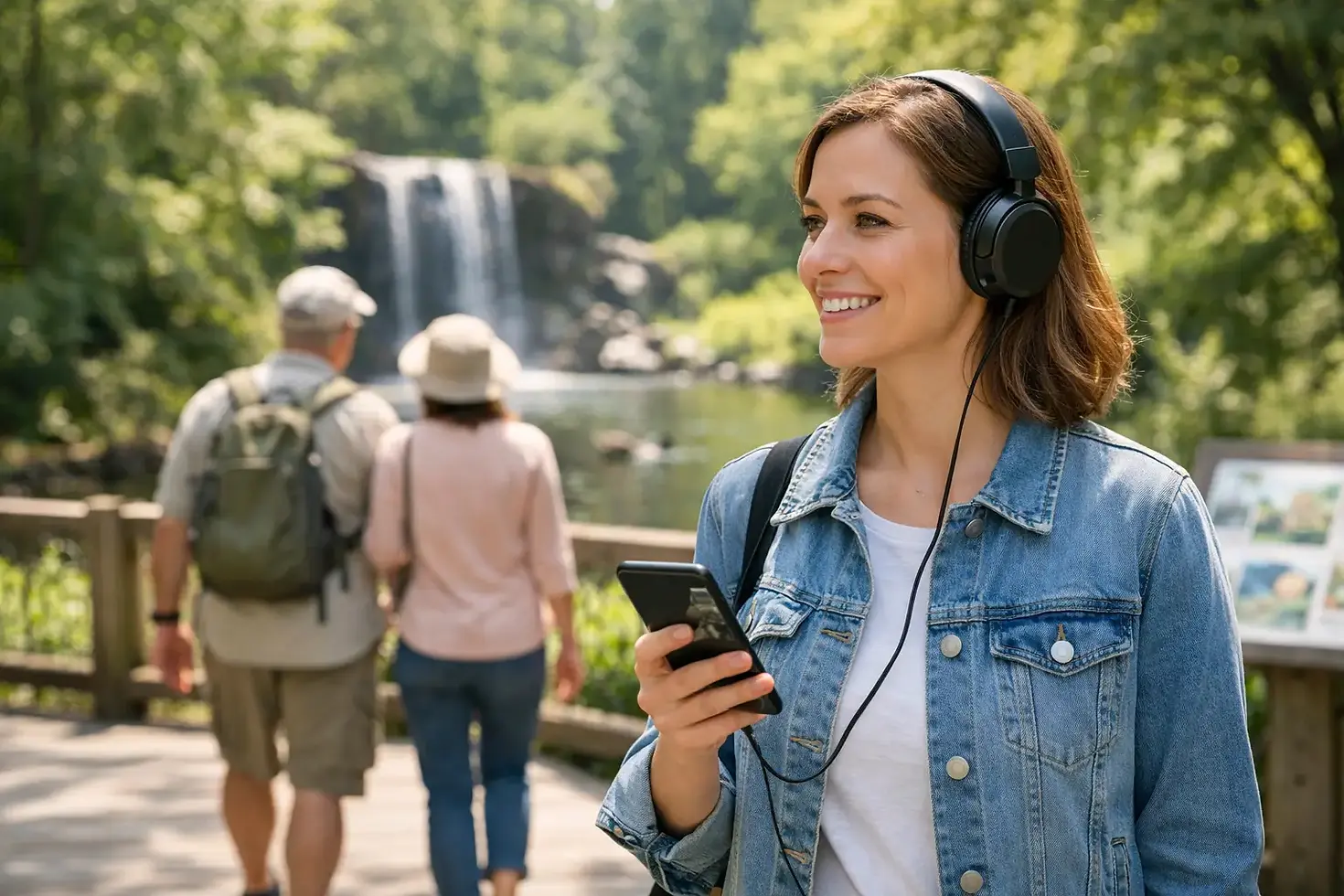
Using Audio Tours for Park Visits Better
- Coquí Guides

- Jul 7
- 6 min read
The best park moments usually do not happen at the entrance sign. They happen ten minutes later, when the crowd thins out, the trail opens up, and you realize you have no idea what you are looking at. That is exactly where using audio tours for park visits starts to shine. Instead of wandering past overlooks, historic markers, and hidden corners without context, you get a guide in your pocket that helps the place come alive - on your schedule.
For travelers who want freedom without feeling lost, audio tours hit a sweet spot. You keep the independence of a self-paced outing, but you also get the kind of local insight that turns a nice walk into a memorable experience. In parks, that matters more than people expect. A waterfall is great on its own. Knowing why the rock formations look the way they do, where to pause for the best view, or what story shaped the trail gives the whole visit more depth.
Why using audio tours for park visits works so well
Parks are not like museums. There is no single path, no perfect pace, and no staff member standing beside every viewpoint to explain what makes it special. That flexibility is part of the appeal, but it also creates a gap. Visitors often miss the meaning behind what they see, especially when signs are limited, parking is hectic, or cell service is spotty.
An audio tour fills that gap without taking over the day. It can guide you from stop to stop, explain what matters, and still let you linger where you want. If you want to spend twenty minutes at a scenic overlook, you can. If your family needs a snack break, you take one. If a short trail turns into a longer wander because the view is too good to leave, nothing falls apart.
That freedom is a big reason independent travelers love app-based experiences. You are not trying to keep up with a guide holding a flag, and you are not trapped in a rigid itinerary. You are exploring with structure, not being managed.
Audio tours turn a park visit into a story
A lot of people think audio tours are mostly about directions. Good ones do much more than that. They connect the physical space around you into something coherent. A lookout becomes part of a volcanic landscape. A boardwalk becomes an easy way to understand an ecosystem. A quiet roadside stop becomes a place with history, local character, or a surprising detail you would have missed completely.
That storytelling is especially valuable in destinations where nature and culture overlap closely. In Puerto Rico, for example, many parks and scenic areas are not just beautiful - they are tied to local history, geology, wildlife, and community identity. Hearing that context while you are there changes the experience. You stop seeing stops on a map and start seeing a place with personality.
This is also where self-guided audio can outperform reading signs or searching online as you go. Park signs tend to be brief. Search results can be random, outdated, or too generic. A curated tour is built to answer the exact question travelers keep asking in the moment: what am I looking at, and why should I care?
When an audio tour improves the experience most
Not every park visit needs narration from start to finish. Sometimes the goal is a quiet hike and nothing else. But there are a few situations where using audio tours for park visits makes a noticeable difference.
The first is when you are somewhere new. First-time visitors often do not know which entrances are best, how long a route really takes, or which stops are worth pulling over for. Audio guidance reduces that guesswork.
The second is when you are short on time. If you only have a morning or afternoon, a good tour helps you focus on what is most memorable instead of wasting energy deciding every next move.
The third is when you are traveling with mixed interests. One person wants the scenic photos, another wants history, and someone else just wants a smooth plan with no stress. Audio tours can serve all three. They keep the outing organized while adding enough story and local insight to hold everyone’s attention.
Families often find this especially helpful. Kids may not read long signs, but they will listen to short, engaging explanations. Couples like it too, because it removes some of the planning load and leaves more room to enjoy the day together.
The trade-offs are real, and easy to manage
Audio tours are useful, but they are not magic. The biggest mistake travelers make is assuming the tour will do everything for them. You still need practical judgment. That means checking weather, wearing proper shoes, bringing water, and paying attention to park rules and safety conditions.
There is also the question of pace. Some travelers love detailed commentary. Others want just enough guidance to stay oriented. The best experience depends on your style. If you prefer a quieter outing, pause the audio between stops. Let it support the day rather than dominate it.
Technology matters too. Battery life, downloaded content, and signal strength can affect the experience. In more remote park areas, relying on live service is risky. A downloaded app-based tour is usually the smarter choice because it keeps working even when your bars disappear.
And yes, there are moments when silence is the better guide. If you have reached a beach overlook at sunset or a forest trail where the sounds around you are the main attraction, it is worth putting the phone away for a while. A great audio tour should help you notice a place more fully, not distract you from it.
How to get more from an audio-guided park day
The difference between a decent park visit and an unforgettable one often comes down to timing and mindset. Start earlier than feels necessary if the park is popular. You will get easier parking, cooler temperatures, and a calmer atmosphere. Audio tours are especially enjoyable when you are not trying to rush past crowds.
Before you head out, download everything you need and skim the route. You do not need to memorize it, but it helps to know whether the experience is more drive-focused, trail-focused, or a mix of both. That makes it easier to match the outing to your energy level.
Once you are there, resist the urge to treat every stop like a checklist. The point is not to race through every marked point. The point is to notice more, understand more, and enjoy more. If one location grabs you, stay longer. If another does not, move on. That is the beauty of self-paced travel.
It also helps to use one earbud or play audio softly when appropriate, especially in shared outdoor spaces. You want the story, but you also want to stay aware of your surroundings. In parks, that is not just polite - it is practical.
What makes a great park audio tour
Not all tours are built equally. A strong park audio experience should feel like a knowledgeable local riding along, not like a textbook being read aloud. The tone matters. So does the pacing.
The best tours give clear guidance without overloading you. They point out what is worth seeing, share the story behind it, and leave room for the landscape to do its job. They are curated enough to save you time but flexible enough to fit real travel days, which rarely go exactly as planned.
Local perspective is the real advantage. Anyone can repeat a fact pulled from a brochure. A well-crafted tour goes further. It helps you understand which stops are iconic, which ones are underrated, and which small detours are actually worth it. That is where a brand like Coquí Guides stands out - the experience is built around independent exploration, but with local insight that makes the island feel more open, more navigable, and a lot more exciting.
A smarter way to explore parks
There is a reason so many travelers are moving away from rigid tours and toward app-based experiences. They want the freedom to follow their own rhythm without sacrificing context. Parks are one of the best places to do exactly that.
Using audio tours for park visits gives you a rare combination: flexibility, guidance, and discovery in the same experience. You get to choose the pace, but you do not have to settle for a surface-level visit. You can catch the famous viewpoints and still find the spots that feel personal, surprising, and a little less obvious.
If your ideal trip includes scenic stops, hidden gems, and fewer moments spent wondering what to do next, an audio tour is not just a convenience. It is a better way to pay attention. And in a great park, paying attention is where the real adventure begins.


Comments